Every species has a story — but without a name, that story may never be told.
The TETTRIs project, a coalition of Europe’s leading natural history museums and botanical gardens, is calling on scientists, students and nature enthusiasts to celebrate taxonomy — the science that names, describes and classifies life on Earth.
Taxonomy helps us understand the relationships between living organisms and is essential for biodiversity conservation, research, education, medicine and agriculture. Yet scientists still know far too little about how many species exist and where they are found. Closing this knowledge gap requires not only scientific expertise, but also the contribution of citizen science.
On 23 May, the EU-funded TETTRIs project will lead a global initiative to highlight the importance of naming species and making taxonomy visible.
How can you participate?
Taking part is simple:
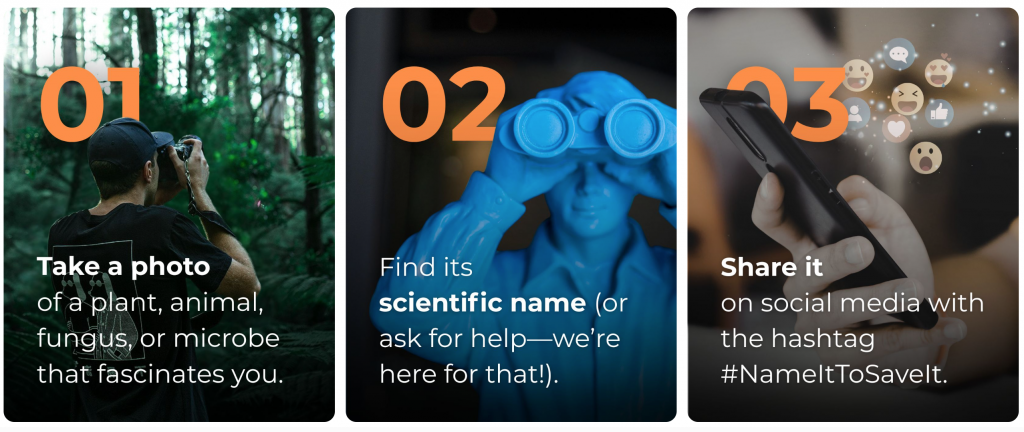
- Take a photo of a plant, animal, fungus or microbe that fascinates you
- Find its scientific name
- Share it on social media using the hashtag #NameItToSaveIt
Participants are also encouraged to upload their observations to biodiversity recording platforms such as observation.org. By doing so, a simple photo becomes a valuable data point that scientists can use to track species distributions, abundance and changes over time.
Every name is a step towards protection.
Every observation strengthens biodiversity knowledge.
Although observations can be shared all year round, the main celebration takes place on 23 May — Taxonomy Recognition Day.
Why 23 May?
The date marks the birthday of Carl Linnaeus (1707), widely considered the father of modern taxonomy. It also follows the International Day for Biological Diversity, highlighting the fundamental role taxonomy plays in understanding and protecting life on Earth.
Taxonomy Recognition Day is part of the broader work of the TETTRIs project, which aims to strengthen taxonomy in Europe. The project develops genomic tools, artificial intelligence and digital reference collections, builds capacity through training initiatives such as CETAF-DEST, and explores new career pathways for taxonomists.
By enabling interoperable biodiversity data, supporting expert collaboration and promoting citizen science, TETTRIs seeks to position taxonomy as essential scientific infrastructure for European biodiversity conservation, policy and resilient economies.
Find more info here.