Listening to the hidden diversity of Europe’s grasshoppers and crickets
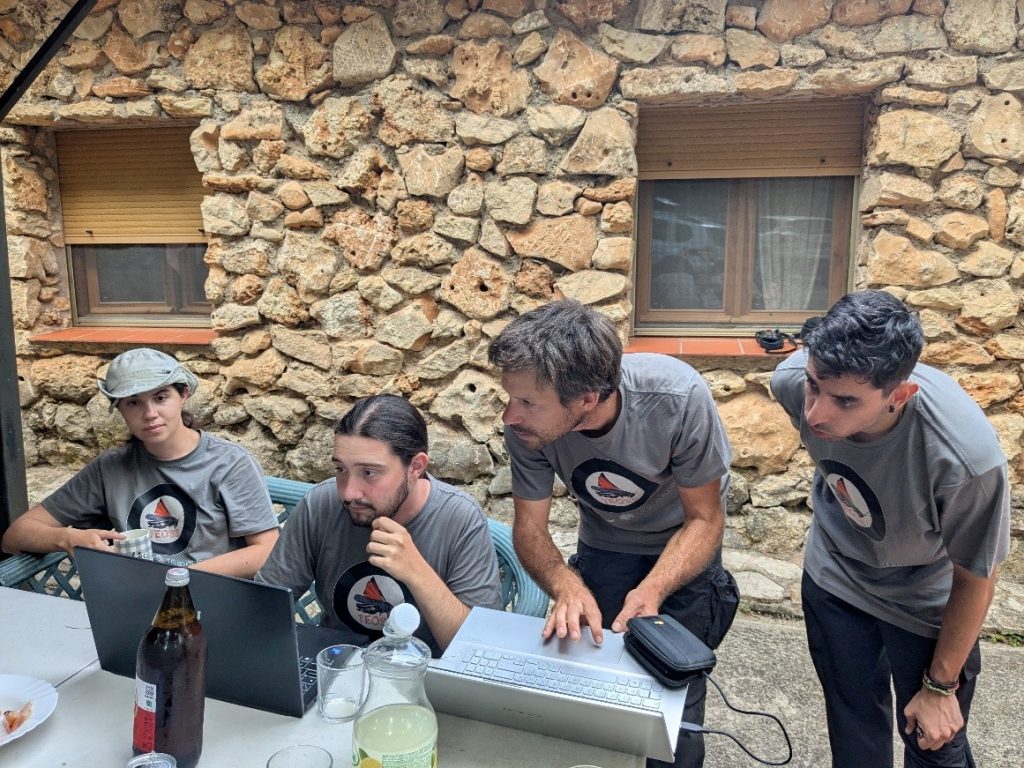
In September 2025, the TEOSS project carried out its fifth field campaign—TEOSS 5, a nine-day expedition across Sierra Nevada and the Baetic Mountain Range in Andalusia (southern Spain). Led by AEA El Bosque Animado and supported by the TETTRIs initiative, this mission aimed to record Orthoptera species that are scarce, poorly documented, or even absent from existing sound libraries.
The result was one of the most productive TEOSS expeditions so far.
Why Andalusia? A biodiversity hotspot
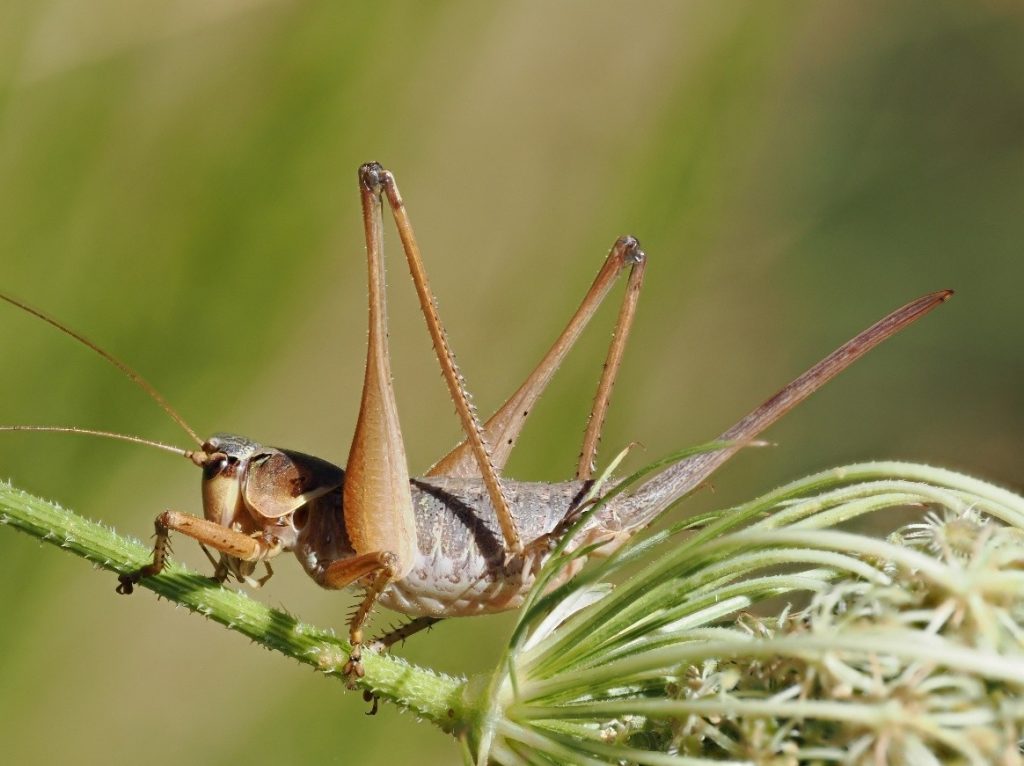
Southern Spain is known for its exceptional diversity of Orthoptera, including numerous endemics and species adapted to extreme habitats:
-
high-elevation plateaus above 2,500 m,
-
arid Mediterranean slopes,
-
rocky alpine grasslands shaped by harsh winds,
-
isolated valleys hosting unique assemblages.
Many species in these environments are difficult to detect visually—but their calls provide reliable clues to their identity. This makes the region ideal for TEOSS’s mission to strengthen Europe’s acoustic database for Orthoptera.
What happened in TEOSS 5? An expedition from day to night
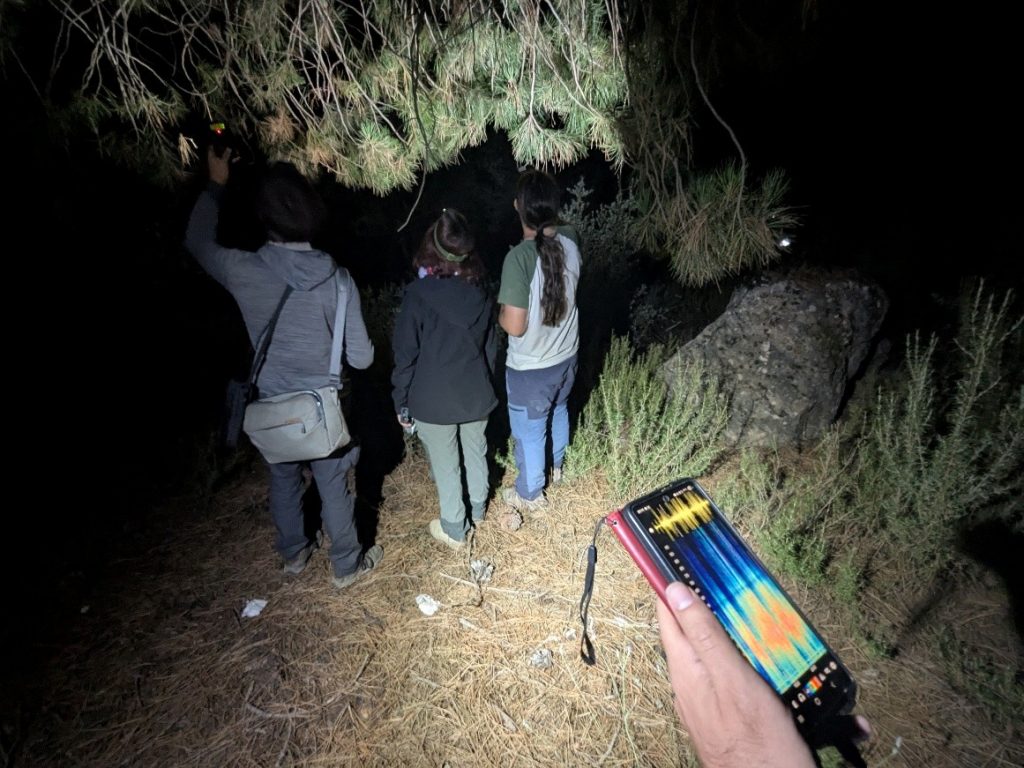
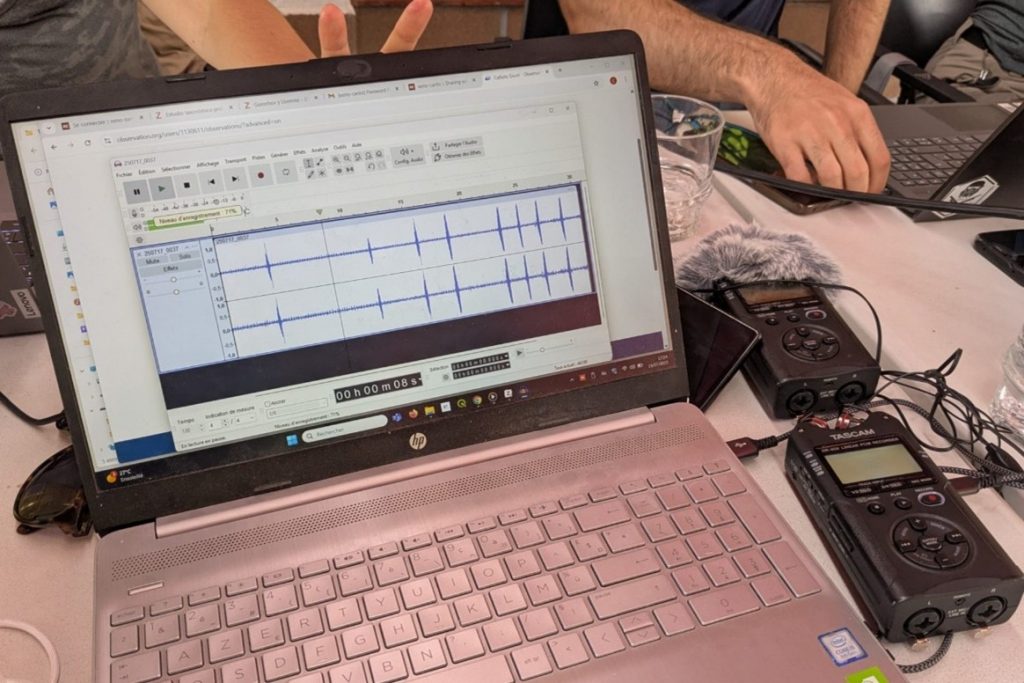
The TEOSS 5 team combined daytime surveys, nocturnal sampling, and bioacoustic recording using both standard recorders and ultrasound detectors. This combination allowed the detection of species that usually go unnoticed.
Highlights from the field
-
On the high slopes of the Veleta peak, the team recorded Baetica ustulata, a dark-bodied, cold-adapted ensiferan living under rocks and low vegetation.
-
Species such as Myrmeleotettix maculatus australis, previously known in Sierra Nevada from just one historical specimen, were confirmed in the field.
-
Nighttime surveys using ultrasound detectors revealed the presence of Canariola emarginata, a species whose calls are inaudible to the human ear and whose occurrence in Sierra Nevada had been rarely documented.
-
In arid high-altitude zones, the team encountered Orthoptera specially adapted to harsh, sparse environments—adding valuable diversity to the overall dataset.
Together, these methods produced one of the richest and most complete acoustic datasets collected by TEOSS to date.
Numbers that matter: a significant contribution to Europe’s sound libraries
In nine days of fieldwork, TEOSS 5 recorded:
-
80 Orthoptera species directly during the expedition,
-
110 species when including observations made during travel,
-
nearly 400 high-quality acoustic recordings uploaded to open platforms.
This remarkable output represents roughly:
“1% of all Orthoptera recordings available on Xeno-Canto as of September 2025.”
For a single field campaign, this is an exceptional scientific contribution.
These recordings include poorly known mountain endemics, species with ultrasounds or near-ultrasound calls, taxa with almost no previous acoustic documentation, and species whose identification is only possible through sound.